

Welcome back to Chester’s Blog, where we tackle the real, sometimes complex, and always passionate discussions that modern dog parents navigate every day. Today, we're diving into one of the most polarizing topics in canine nutrition: the "Vegan vs. Carnivorous" debate.
We usually share recipes for functional wellness treats (like our upcoming Wellness Bites), but understanding the fundamental dietary philosophies is essential for every pet guardian. While this conversation is highly charged, our goal here is not to promote one side over the other, but to provide a balanced, evidence-based overview so you can make the most informed decision for your specific dog.
The Biological Blueprint: Are Dogs Carnivores?
To understand the debate, we must first understand the dog. Are they carnivores? Technically, no. While they share a common ancestor with the wolf, dogs are classified as facultative omnivores.
This distinction is crucial. Unlike a "true" or "obligate" carnivore (like a cat, which requires certain nutrients only found in meat, such as taurine and pre-formed Vitamin A), dogs have evolved an incredible ability to digest carbohydrates.
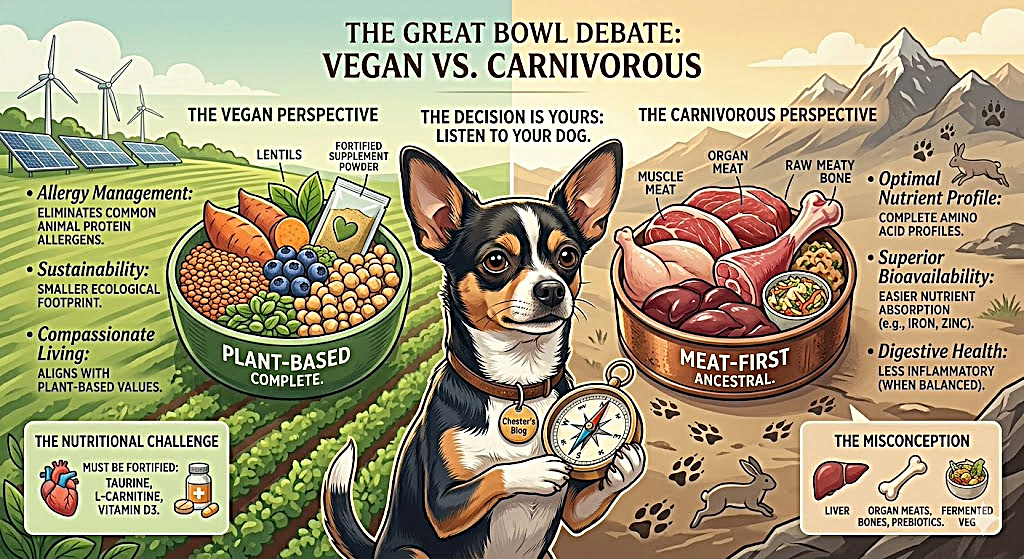
Key Biological Factors:
Amylase Production: Dogs possess up to 30 times more copies of the gene responsible for amylase production (AMY2B) than their wolf ancestors. Amylase is the enzyme that breaks down starches.
Versatile Digestion: They can physically digest and absorb nutrients from plant sources, including proteins, fats, and complex carbs.
While this evolution gives them dietary flexibility, the question remains: is a diet primarily or solely plant-based optimal for their unique biology?
The Vegan Perspective: A Compassionate Choice?
The conversation around veganism for dogs has grown alongside the human vegan movement. Proponents argue that with careful supplementation, a completely plant-based diet can meet all of a dog's nutritional requirements.
The Argument For a Vegan Dog Diet:
Allergy Management: Many environmental and food allergies in dogs are triggered by common animal proteins (beef, chicken, dairy). Vegan diets, by definition, eliminate these primary culprits.
Sustainability: A 2017 study suggested that pet food is responsible for up to 30% of the environmental impact of meat consumption in the U.S. A plant-based diet has a significantly smaller ecological footprint.
Compassionate Living: For guardians whose own ethics are centered on non-violence toward animals, extending this philosophy to their canine companion is a logical, value-driven choice.
The Nutritional Challenge: The Caveat of Completeness
This is where the debate gets critical. A vegan diet must be fortified. Essential nutrients commonly lacking in plant sources include:
Taurine & L-Carnitine: Deficiencies are linked to Dilated Cardiomyopathy (DCM), a serious heart condition.
Vitamin D3: Dogs (like humans) cannot synthesize this from the sun; they must ingest it. It is primarily found in animal products.
Specific Amino Acids (like Lysine and Tryptophan): Achieving a complete amino acid profile requires a complex and precise mix of plant proteins.
The Carnivorous Perspective: Ancestral Wisdom?
The alternative is the meat-first philosophy. Proponents argue that just because a dog can digest plants, it doesn’t mean they should prioritize them. This view aligns more closely with the Ancestral (Raw or BARF) approach.
The Argument For a Carnivorous/Meat-Based Dog Diet:
Optimal Nutrient Profile: Animal proteins are "complete," meaning they contain all the essential amino acids a dog needs, often in the correct ratios.
Superior Bioavailability: Nutrients (like iron, zinc, and pre-formed Vitamin A) are generally more "bioavailable" (easier for the body to absorb) from meat sources than their plant-based precursors (like Beta-Carotene).
Digestive Health: Critics of grain-heavy diets argue that large amounts of starch can lead to inflammation and put stress on the pancreas.
The Misconception of "Carnivorous": The Need for Balance
"Meat-first" does not mean "all meat." Even wolves consume plant matter—it's just found in the stomachs of their omnivorous prey.
A purely carnivorous diet (just raw muscle meat) is dangerous and causes severe nutritional imbalances. A proper meat-based approach must include:
Organ Meats: The powerhouse source of vital vitamins.
Bones: The natural source of calcium and phosphorus.
Functional Plant Matter: Fermented vegetables, fruits, and certain starches provide essential fiber, prebiotics, and phytonutrients.
The takeaway for Chester's Crew
At Chester’s, we recognize that there is no single "perfect" diet for all dogs. The ideal food is the one that meets your dog's specific needs, your values, and your budget, and results in vibrant health.
If you are considering a major shift in your dog's diet, we strongly recommend:
Work with a Professional: Consult with a board-certified veterinary nutritionist (not just a salesperson or influencer) to formulate a complete and balanced plan.
Listen to Your Dog: Are their energy levels high? Is their coat shiny? Are their stools consistent? The proof is always in the pup.
The "Vegan vs. Carnivorous" debate is complex, but the goal is simple: a happy, healthy dog, thriving at both ends of the leash.
We want to hear from you! What is your experience navigating these conversations, and how did you decide what was right for your dog? Share your stories in the comments below!